Glow Jobs: Not all lasers are created equal. Here's what to know before you commit.
- Jul 3, 2025
- 6 min read
By LOUISA LIM

If you’ve been scrolling Instagram or walking past a beauty clinic in the mall, you’ve likely seen the promos: “Laser Facial from $10!” or “3 Sessions for $199!”
That was exactly what drew Veronica Tan, a marketing executive in her 30s, to an aesthetic clinic located in the central business district. She spotted the offer displayed prominently at the entrance and decided to give it a try.
“They mislead you into thinking you’re not supposed to see results right away, sell you a package, and then use the most minimal settings to reduce their risk without delivering any real change. To hook me in, they zapped one freckle as a demo,” says Veronica, who ended up paying $750 for four laser sessions and one RF microneedling treatment.
But after completing the package, she saw little to no improvement.
“I had to bargain with them to go to a depth of 1 to 1.5mm for almost 40 minutes — the default, I believe, is far too shallow to have any impact. Apart from that, the numbing cream worked well, and it wasn’t too painful. Aftercare was fine. But nothing can take away the fact that their treatments are basically useless.”
For many customers, the promise of cutting-edge treatments at rock-bottom prices can be hard to resist. But as Vanessa’s experience shows, the reality often falls short.
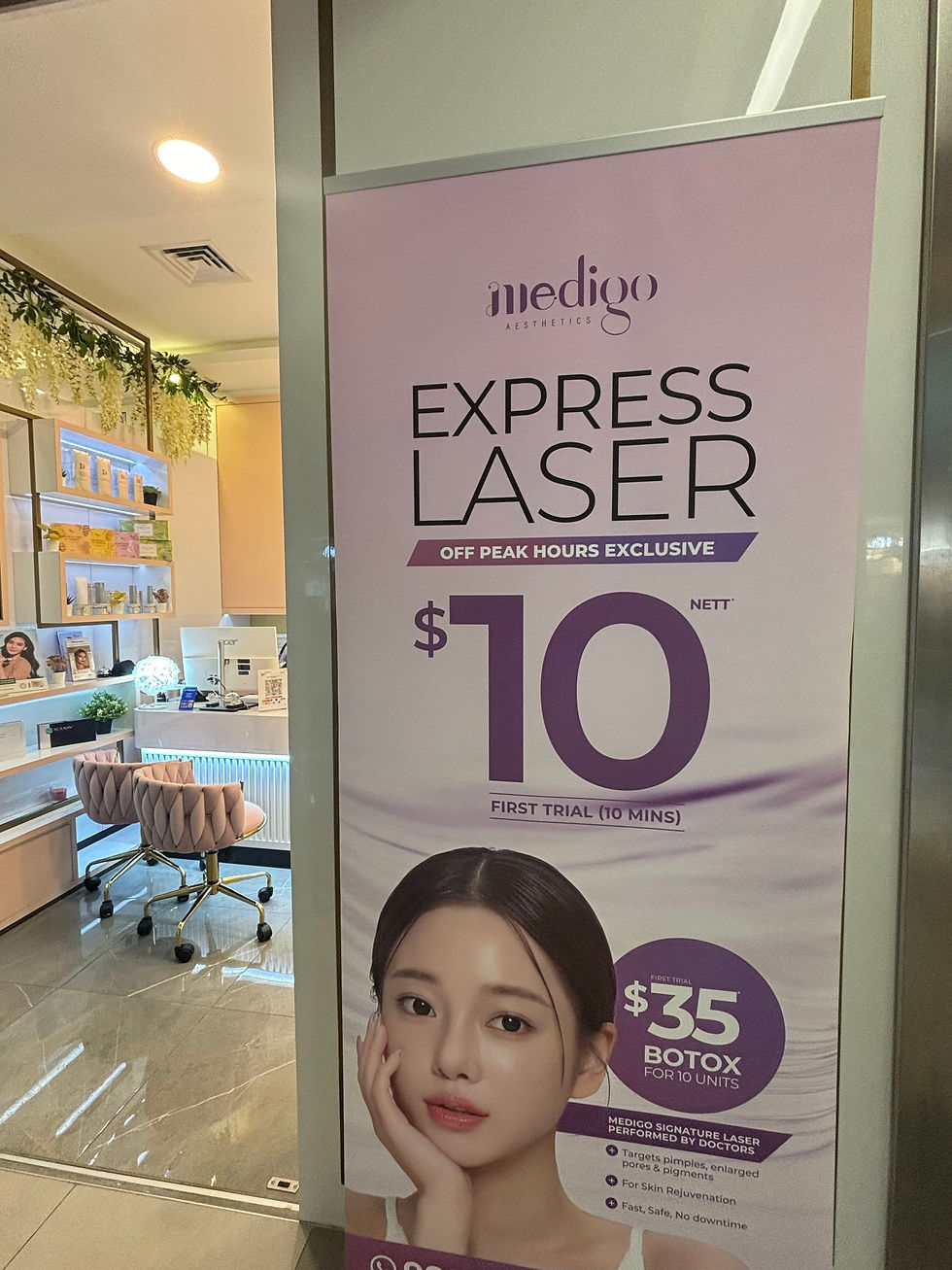
The Rise of the Budget Beam.
Dr Francis Tjang, a veteran aesthetic doctor at The Aesthetics Medical Clinic, says the post-pandemic boom in beauty treatments — amplified by social media’s obsession with flawless skin — has triggered a surge in aesthetic clinics across Singapore. And with more players in the game, competition is fierce.
“It’s only natural that pricing becomes a key battleground,” he explains.
But here’s where things get murky: “laser treatment” is a catch-all term that covers more than ten different modalities, each designed to target specific skin concerns like pigmentation, acne scars, wrinkles, or enlarged pores. Different types of lasers have different price points, and fractional lasers are usually pricier than lasers that perform general toning. But the price you pay isn’t just for the treatment — it often reflects the type and quality of the device being used.
While premium clinics invest in FDA-approved devices from established global manufacturers, budget clinics rely on dupes — lower-cost replicas of name-brand machines, often sourced overseas. They may look the part, but beneath the casing, they can lack the power or precision.
Low Power, Low Payoff But while not every budget treatment is ineffective, Dr Francis notes that lower prices often translate into lower energy output — meaning more sessions are needed for results.
“If the operator uses a very low laser setting, the results will likely be underwhelming,” he says. He also stresses that it’s not just about the machine but who’s behind it: “You need someone who understands your skin type and condition, and knows how to adjust the settings accordingly.”
This is especially important for more complex skin issues like pitted acne scars, which require higher energy levels to trigger deep skin remodelling.“If the settings are too weak, the laser won’t penetrate deep enough to make any real difference,” he adds.

No one-size-fits-all approach The Pico laser is one of the most requested treatments today, thanks to hype on social media and its reputation as the latest must-try technology.
But according to Dr Francis, not every skin concern is best served by a Pico device.
“It may be excellent for certain conditions, like tattoo removal and superficial pigmentation, but it’s not a one-size-fits-all solution,” he says.
Dr Francis explains that the skin isn’t just one flat surface — it’s made up of multiple layers, each with its own issues. The outermost epidermis shows pigmentation and texture. The deeper dermis holds collagen and elasticity.
“Different lasers are designed to reach different depths,” Dr Tjang says. Ablative lasers work by gently removing a thin layer of the skin’s surface (the epidermis) to trigger renewal. Think of it like controlled micro-exfoliation. They’re especially effective for acne scars, fine lines, enlarged pores, and sun damage. Results tend to be longer lasting — but downtime can be slightly more noticeable.
Non-ablative lasers, on the other hand, heat the deeper layers of the skin without damaging the surface. These are great for pigmentation, dullness, uneven tone, and oil control. They tend to have little to no downtime but may require more sessions for cumulative effects. An Omakase Approach
Some clinics take an omakase approach to laser treatments, much like a Japanese omakase meal, where the chef chooses the best ingredients for you based on what’s freshest and most suitable that day.
By layering both technologies in a single session — at carefully calibrated energy levels — doctors are able to treat several skin concerns across different layers of the skin, all while keeping side effects to a minimum.
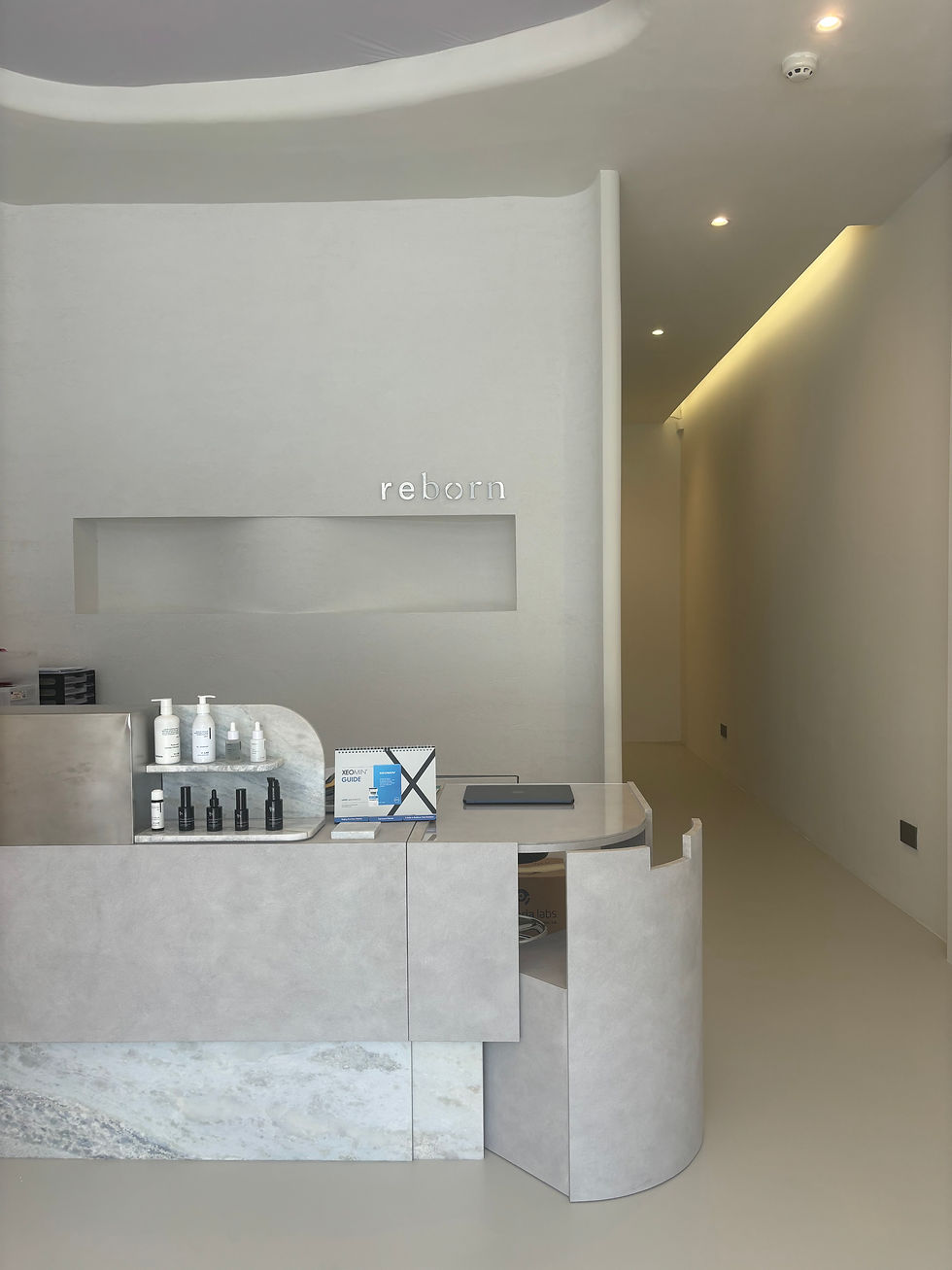
Opening in November 2025, Reborn is a new aesthetic clinic on East Coast Road offering a range of laser treatments customised by skin type. Their packages combine the laser procedure with pre- and post-treatment care for better results. The 3-in-1 bundles start from S$488.
Meanwhile, freelance actress Tan Sze Yoong, 43, began her combination laser treatments at Eagle Aesthetics and Surgery in 2021, shortly after giving birth to her youngest daughter. At the time, she was dealing with post-pregnancy pigmentation and Topical Steroid Withdrawal (TSW) flares, which left her skin sensitive and unpredictable.
“I was overwhelmed by all the different types of lasers out there,” she says. “But I didn’t want to gamble on my skin. I wanted a doctor who could assess my condition and recommend what actually works.”

After a full consultation, Dr Timothy Shim prescribed a mix of four different lasers to refine pores and even out tone. Over 10 sessions, the changes were gradual but undeniable: her skin grew clearer, more radiant, and smooth enough that she was confident going without foundation — something she hadn’t done in years. Enter the Digital Peel
Meanwhile, new-generation systems are raising the bar with greater precision and multi-tasking capabilities. One of the latest to enter Singapore is the MultiFrax Digital Peel, a fractional laser that works at not just one, but two wavelengths simultaneously.
The Digital Peel combines a 1550nm wavelength for deeper collagen restructuring with a 1927nm wavelength for surface renewal. In practice, this means a single session can improve fine lines, pigmentation, pore size, and texture, while also brightening overall tone.
What sets it apart, according to doctors who have trialled the system, is the balance of depth and recovery. The device creates controlled micro-columns of heat in the skin to trigger repair, but because the energy is distributed so precisely, the surrounding tissue is left untouched.
However, Digital Peel treatments are also more expensive compared to standard laser options, and are priced between $480 and $680, depending on the procedure and the part of the face being targeted.
Lasers have limits
While laser technology has come a long way, it’s not without limitations, especially when it comes to treating darker skin tones.
“Darker skin contains more melanocytes, the cells responsible for pigment,” explains Dr Francis Tjang. “That makes it more reactive to heat, and more prone to side effects like post-inflammatory hyperpigmentation (PIH) if not treated carefully.
Digital Peels stands out as an exception, as doctors say it is safe for sensitive and melanin-rich skin. This is because its energy is absorbed by the water content of the skin rather than its pigment, making it effective across all skin types and tones.
Lasers are also unable to hydrate the skin, regardless of skin tone.
“In fact, lasers can sometimes leave the skin feeling drier,” says Dr Tjang, adding that this is why he often pairs them with skinboosters — injectables that replenish moisture and reinforce the skin barrier.
And for those expecting a non-surgical facelift from lasers? That’s not realistic.
“Lasers work well on the skin’s upper layers. But if someone in their 50s comes in with significant sagging, they’ll likely need additional technologies like radiofrequency or high-intensity focused ultrasound (HIFU) to achieve noticeable lifting,” he adds
TL;DR – Don’t Just Shop by Price
Laser treatments are an investment and your skin deserves more than a mystery machine and a one-size-fits-all plan. Whether you’re spending $200 or $2,000, ask the right questions and do your research.
And remember: if an aesthetics clinic promises a miracle glow in one session on Instagram… it’s probably too good to be true.

Comments